What actually makes a clip go viral (and what doesn't)
The hook, the cut, and the unglamorous mechanics behind clips that travel

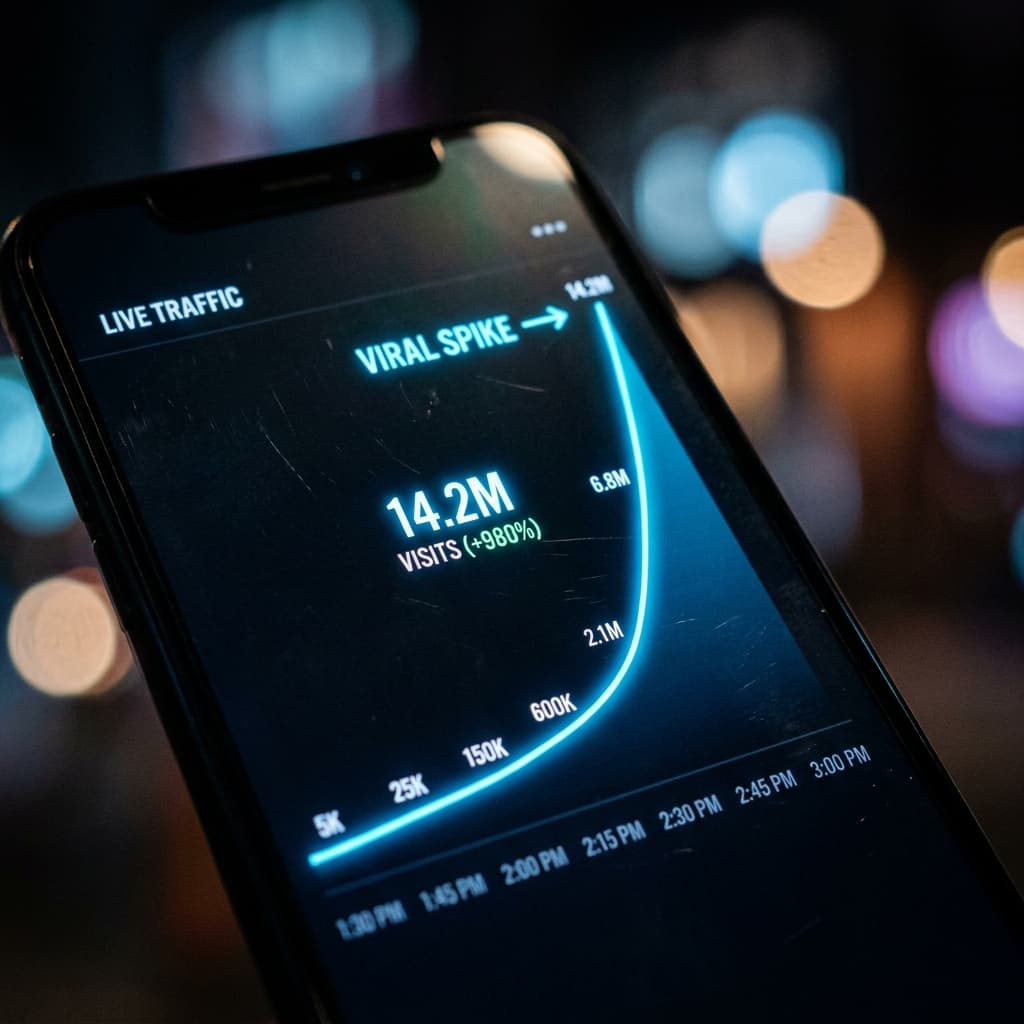
Two clippers cut the same podcast moment. Same guest, same quote, same 28 seconds. One does 4,000 views. The other does 1.9 million.
The difference wasn't the moment. The moment was identical. The difference was a three-second decision about where the clip started, and that decision is most of the job.
People love to call virality luck. There's luck in it, sure. But after watching enough clips win and lose, the pattern is too consistent to be random. Hits share a small set of mechanics. Flops break them.
The first two seconds decide everything
A scroll is a verdict. Someone's thumb is already moving when your clip appears, and you get roughly two seconds to give them a reason to stop. Not to understand the whole thing. Just to stay.
The clips that win front-load tension. They drop you into the middle of something unresolved.
Same story. The hit just started 40 seconds later, right where the stakes are. The setup that felt necessary to the editor is dead weight to the viewer. Cut it.
This is why where you start the clip matters more than almost anything else. Most beginners start too early because the context feels important. It isn't. The viewer will infer the context from the payoff, and they'll stay because you made them curious instead of patient.
Captions are not optional
A huge share of short-form viewing happens with the sound off. If your clip only works with audio, it doesn't work.
Captions do two jobs at once. They make the clip legible on mute, and they control pace. Fast, punchy, word-by-word captions create momentum. They also give the eye something to track, which keeps people watching even through a slow second.
A few things the good ones get right:
Plain auto-captions are fine to start. But pacing the captions to the speech, instead of dumping a paragraph on screen, is a small effort that separates clips that feel native from clips that feel uploaded.
Length: shorter than you want it to be
Clippers fall in love with moments and let them run long. The internet does not share your love.
Most clips that travel are shorter than editors expect, often in the 18-to-35-second range. Not because short is magic, but because a tight clip earns a higher completion rate, and completion is one of the strongest signals you can send a platform. A 22-second clip watched to the end beats a 70-second clip abandoned at the halfway mark, every time.
This doesn't mean cut everything to 15 seconds. A two-minute clip can absolutely hit if every second earns its place. It means cut the parts that don't. The rambling windup, the throat-clearing, the part where the speaker repeats themselves. If a second isn't pulling its weight, it's working against you.
The thing you can't control, and what to do about it
Here's the honest part. You can do everything right and the clip still dies. You can do a few things wrong and it still pops. The platform's distribution is a black box, and anyone who tells you they've cracked it completely is selling something.
So the people who win consistently don't bet on single clips. They bet on volume and let the hits emerge.
This is the part beginners resist and pros accept. You're not trying to make one perfect clip. You're trying to make a lot of good ones and let the algorithm tell you which moments the world wants. That's why a network model works so well. Hand one podcast episode to a network of 120,000-plus clippers and you don't get four guesses at virality. You get hundreds of cuts testing hundreds of hooks, and the winners surface because the volume gave them room to.
No single editor can do that. Not because they lack taste, but because they lack reps. The network manufactures reps.
What doesn't make a clip go viral
Worth naming the myths, because chasing them wastes time:
The common thread: people reach for the variable they can control instead of the one that matters. The one that matters is whether the first two seconds make a stranger stop.
Key takeaways
FAQ
Why did my clip flop when the moment was great?
Usually the cut point. A great moment buried behind 20 seconds of setup reads as a slow clip. Re-cut it to start right on the payoff and repost. The same moment often performs completely differently.
Do I need expensive editing software?
No. CapCut on a phone covers the basics: trimming, captions, and a cover frame. Editing polish is not what makes clips travel. Hook and cut point are.
How many clips before one hits?
There's no fixed number, and anyone who gives you one is guessing. The useful reframe is to stop counting and keep posting. Volume is the strategy, not the obstacle.
Does the source content matter, or is it all editing?
Both. Some source material is just richer, with more clippable moments per hour. But strong editing can find a hit in ordinary content, and weak editing can waste a great moment. The cut decides.
Go back and find your worst-performing clip with a genuinely good moment in it. Start it three seconds later, right on the line that matters. Repost it. Then come back and tell me virality is luck.